- Grow 📧 Monetize
- Posts
- 📩 Stop scaling co-reg like it's 2019

I've watched operators flip on a co-reg source, ramp to 1,000 new subs a day, and brick their domain inside two weeks. Every single one of them blamed the traffic.
The traffic wasn't the problem. The flow was. Here's what actually works.
The failure pattern looks the same every time.
Operator turns on a new source. Goes 0 to 1,000 leads a day overnight. Seven to fourteen days later: open rates tank, complaints creep up, Gmail starts tightening, and the operator concludes "co-reg doesn't work."
In partnership with

How Marketers Are Scaling With AI in 2026

61% of marketers say this is the biggest marketing shift in decades.
Get the data and trends shaping growth in 2026 with this groundbreaking state of marketing report.
Inside you’ll discover:
Results from over 1,500 marketers centered around results, goals and priorities in the age of AI
Stand out content and growth trends in a world full of noise
How to scale with AI without losing humanity
Where to invest for the best return in 2026
Download your 2026 state of marketing report today.
The rule that nobody follows: start at 25 to 50 subs a day. Scale after 30 days. That's it.
What to do: cap a new source at 50 a day for the first 30 days. Watch opens, clicks, and complaints by source only, not your whole list. If the numbers stay clean, double it. Then double again. Slow is the whole game.
Co-reg leads aren't bad. They're different.
This is where most operators mislabel the traffic.
Co-reg leads come in with lower initial intent. They need faster activation. They need tighter segmentation. They are not plug-and-play and they are not junk.
If your organic list opens at 50%, expect co-reg to come in around 30 to 35%. That gap is not a bug. That is the source behaving like co-reg.
The problem isn't the lead. It's what happens in the first seven days after you get it.
The only metric that matters
Most operators look at CPL, topline open rate, and total list size. That's it.
Here's the question that actually decides whether co-reg is making you money:
What is your cost per activated subscriber?
If you're not tracking activation rate by source, click behavior by source, and retention by source, you're flying blind. You're probably scaling the wrong traffic because your dashboard can't tell the good from the garbage.
Action: tag every new subscriber with their source. Run a 30-day report. Look at revenue per activated sub by source. The cheapest CPL often costs the most per activation.
The onboarding trap
This one kills more co-reg budgets than anything else.
Operators get new co-reg leads and immediately dump them into long automation sequences, webinar funnels, or hard monetization flows. That's backward.
Send your best content immediately. Don't wait.
Co-reg leads don't need a funnel. They need a reason to engage. Lead with the single issue that proves why you exist. Your best work, sent on day one, does more for retention than any 9-email nurture sequence ever written.
The rememberability problem
A lot of co-reg pages stack 10 or more offers, mix unrelated topics, and drown the user.
Result: they don't remember what they signed up for. They see your first email. They hit report spam. That's your deliverability eating itself.
The sweet spot is 3 to 5 tightly matched offers per page. Any more and quality drops fast. Any fewer and volume suffers.
If you run your own co-reg page, audit it. Count the offers. Count how many logically fit together. Trim anything that doesn't.
When Pressure Rises, Here’s Where Leaders Turn
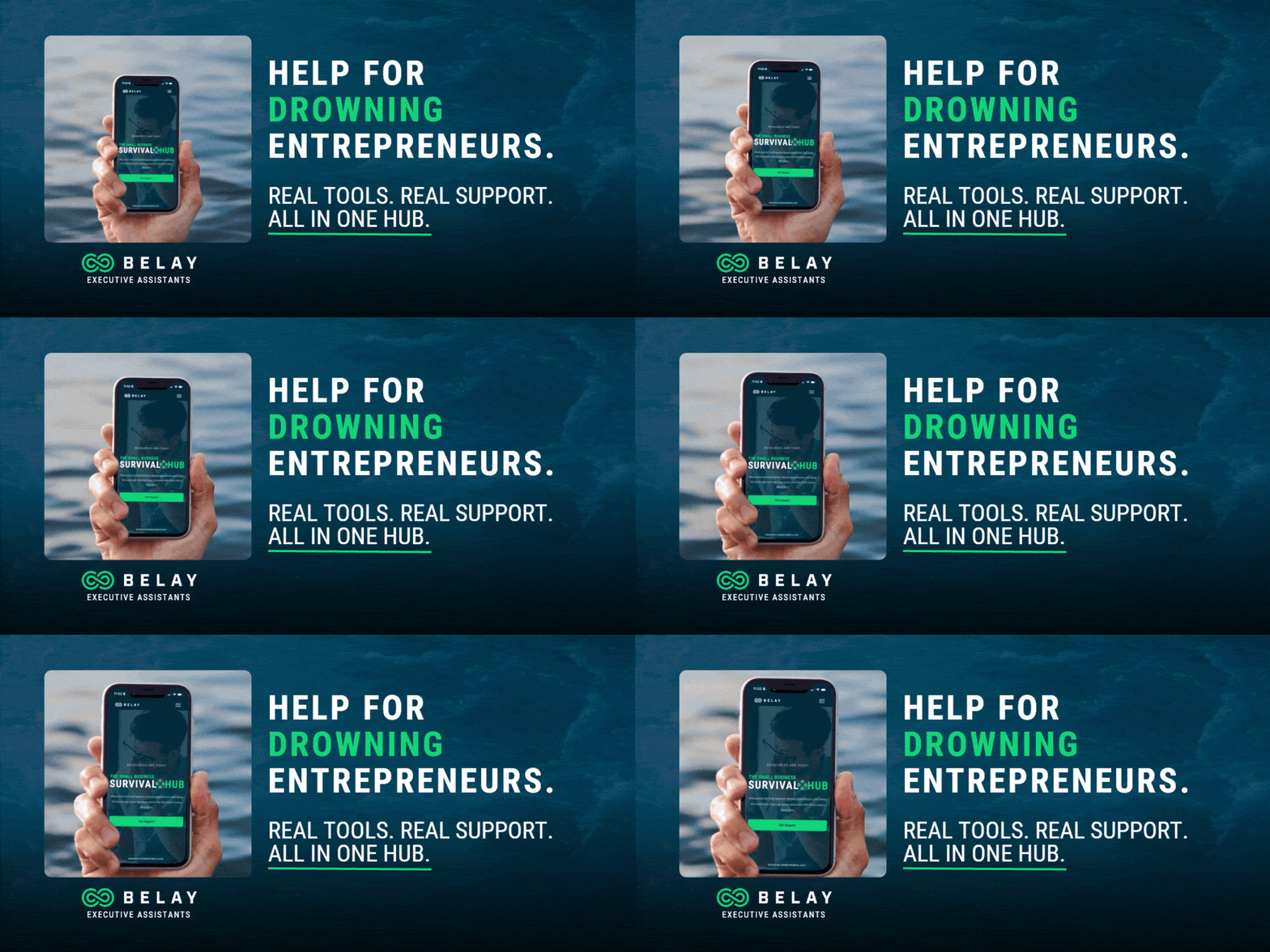
Costs rise. Clients delay. Pressure builds.
The Survival Hub gives you practical ways to respond from cutting costs to tightening operations and staying on top of revenue.
Built to help you take control when things feel uncertain.
*Ad
Why most co-reg traffic is junk
Good networks run multiple validation layers: bot filtering, spam trap detection, duplicate suppression. Even with all of that, 5 to 10% of daily traffic gets thrown out.
Now think about how much garbage is getting through networks that aren't filtering at all.
Ask any co-reg partner: what percentage of your daily volume fails validation? If they can't answer, assume the worst and test at 50 a day.
Where this is going
Two shifts worth watching.
Better matching. Not "finance newsletter to finance offers." The new baseline is behavior-matched: options traders to options newsletters, income investors to income content. The more granular the match, the better the activation.
Multi-channel ownership. SMS is hot and expensive. Email is still the foundation. SMS is the amplifier. Neither works without engagement, so fix activation before you add another channel.
The real takeaway
Co-reg is a tool. Not magic, not broken, just a tool.
Use it wrong and it burns your domain. Use it right and it becomes one of the most profitable levers on the table.
The formula is boring and it works:
Control activation in the first seven days
Segment by source, always
Scale slowly, 30 days minimum per new source
Track cost per activated sub, not CPL
Most operators aren't losing money on the leads. They're losing it on what happens after the lead comes in.
Your inventory doesn't wait for you to check a dashboard.

Viktor sends daily inventory and reorder alerts to your team's Slack channel. If a SKU is trending toward stockout, you know before it happens.
Your content calendar and social posting run on autopilot. Brand monitoring runs in the background. Viktor handles the recurring work across ops and marketing so your team focuses on growth.
5,700+ teams. 3,000+ integrations.
*Ad